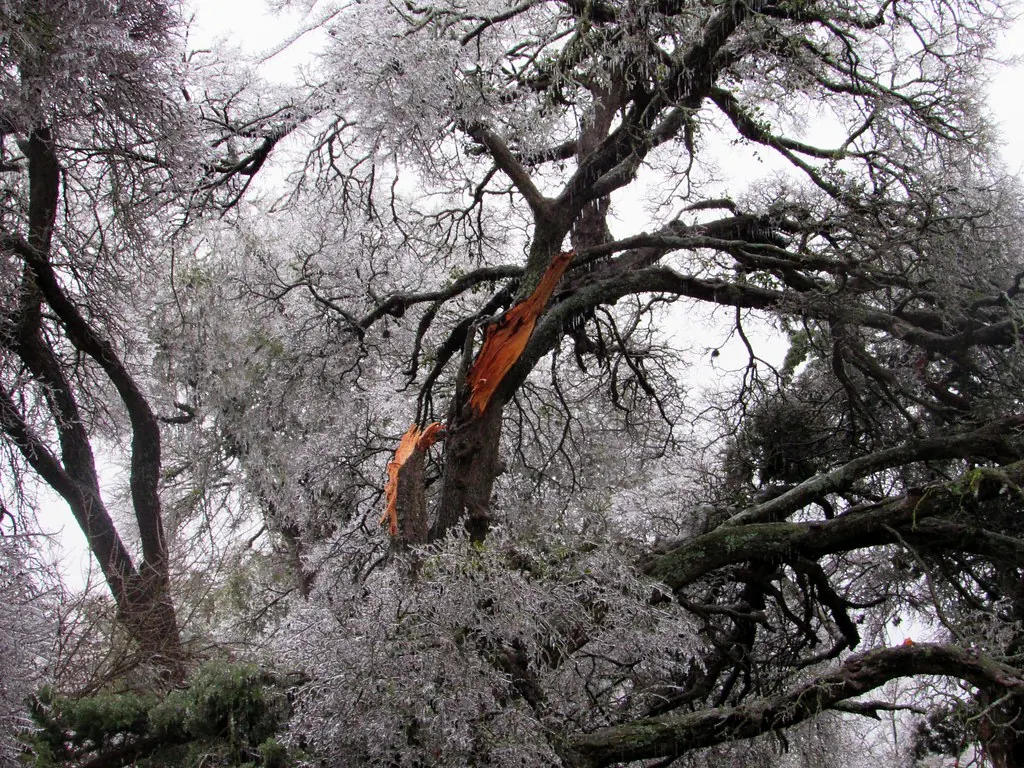
Winter weather in North Carolina tends to arrive as ice rather than deep snow, and ice is hard on houses. The December 2002 ice storm coated the Piedmont, brought down trees and power lines across a wide area and left many households without power for days. The January 2000 snowstorm buried the Triangle. More recently, the Christmas 2022 cold snap sent temperatures plunging and burst pipes in homes that rarely see a sustained hard freeze. These events produce a familiar set of claims, and each comes with its own valuation questions.
Tree limbs on roofs
Ice loading can bring down limbs and whole trees onto roofs, porches, fences and vehicles. On the house itself, the typical claim includes roof decking and framing repair, shingles, gutters, interior ceiling damage from leaks, and tree removal from the structure.
Disputes tend to center on:
- Whether rafters or trusses were damaged and need engineered repair.
- How much of the roof surface must be replaced, versus a localized patch.
- Whether replacement shingles can reasonably match the rest of the roof.
- Interior work such as drywall, insulation and paint after water intrusion.
Debris removal limits
Many homeowners policies treat tree removal and debris removal with care. Removing a tree that struck a covered structure is commonly covered, while removing a tree that fell in the yard without hitting anything may be limited or excluded. Policies often set a separate sub-limit for tree debris, sometimes per tree and per occurrence. Check the debris removal and trees, shrubs and plants sections of your policy before assuming a full removal invoice will be paid.
Burst pipes and frozen plumbing
When temperatures stay well below freezing, pipes in crawlspaces, exterior walls and unheated attics can freeze and split. The real damage often appears when the pipe thaws and water runs until someone finds it.
Policies commonly cover sudden and accidental water discharge, but many also contain freezing-related conditions. A frequent example requires the policyholder to have used reasonable care to maintain heat in the building, or to have shut off the water and drained the system, particularly if the home was vacant or unoccupied. Read that condition closely, because it is often where coverage disputes begin. Questions about whether the condition was met are coverage questions for a North Carolina attorney, not an appraisal panel.
When coverage is accepted, the amount-of-loss questions are familiar: how far water traveled, which materials can be dried and which must be replaced, flooring continuity across rooms, cabinet replacement and whether mold remediation is needed.
Ice dams
Ice dams form when heat escaping through the roof melts snow, and the water refreezes at the colder eaves. Water then backs up under shingles and into walls and ceilings. Interior damage from ice dams is commonly covered, but the cost of removing ice from the roof and fixing attic ventilation or insulation issues may be treated differently. Document interior staining carefully and photograph the ice formation at the eaves before it melts.
Mitigation duties come first
After any winter loss, most policies require reasonable steps to prevent further damage. In practical terms:
- Shut off the main water supply as soon as you discover a leak.
- Tarp roof openings once it is safe to do so.
- Remove standing water and start drying with fans and dehumidifiers.
- Move undamaged belongings out of harm’s way.
- Keep receipts for every mitigation expense and photograph the work.
Damage that worsens because mitigation was delayed may be excluded from the amount of loss. If you cannot reach a contractor quickly during a widespread freeze, write down your efforts and when they happened.
Documenting a winter loss
Winter claims are often reported in waves, with adjusters stretched thin. Strong documentation helps your claim stand on its own:
- Photos of the fallen tree or limb in place before removal, including where it struck.
- Photos of the split pipe section, and keep the pipe if you can.
- Moisture readings from your mitigation contractor, with dates.
- Thermostat settings and any utility outage records.
- Invoices for tree removal, drying and emergency plumbing.
When estimates fall short
Winter claims sometimes come back with estimates that cover the visible damage but miss what is behind it: wet insulation in walls, subfloor swelling, cabinets that delaminate weeks later, or ceiling framing hit by a limb. A supplement request supported by photos and moisture readings often resolves this. When it does not, and the dispute is about value rather than coverage, appraisal can be the next step.
Illustrative example: if the carrier’s estimate for a burst-pipe loss covers drying and drywall in one room, but water also reached the hallway and the flooring runs continuously through both spaces, the difference in scope can be significant. That is a valuation dispute an appraisal panel is designed to resolve. Our settlement gap estimator can help you size the difference first.
How we help
For ice and freeze losses, we review the carrier’s estimate against the damage, identify missed scope and pricing gaps, and, when appraisal is invoked, serve as your appraiser. Learn more on our ice storm and freeze damage page, or contact us to talk through your file.